

On the morning of June 18, 2026, our school held a special lecture on Reinforcement Learning and Multi-Agent Systems in Classroom B207, Sujiao Building. The lecture focused on cutting-edge topics such as cognition-driven social intelligence and adaptive collaboration in open-world embodied multi-agent systems. The session was moderated by Tenure-Track Associate Professor Yang Tianpei of our school, with special guest speakers Dr. Feng Xue from Peking University and Assistant Professor Li Yang from the John Hopcroft Center at the School of Computer Science, Shanghai Jiao Tong University.
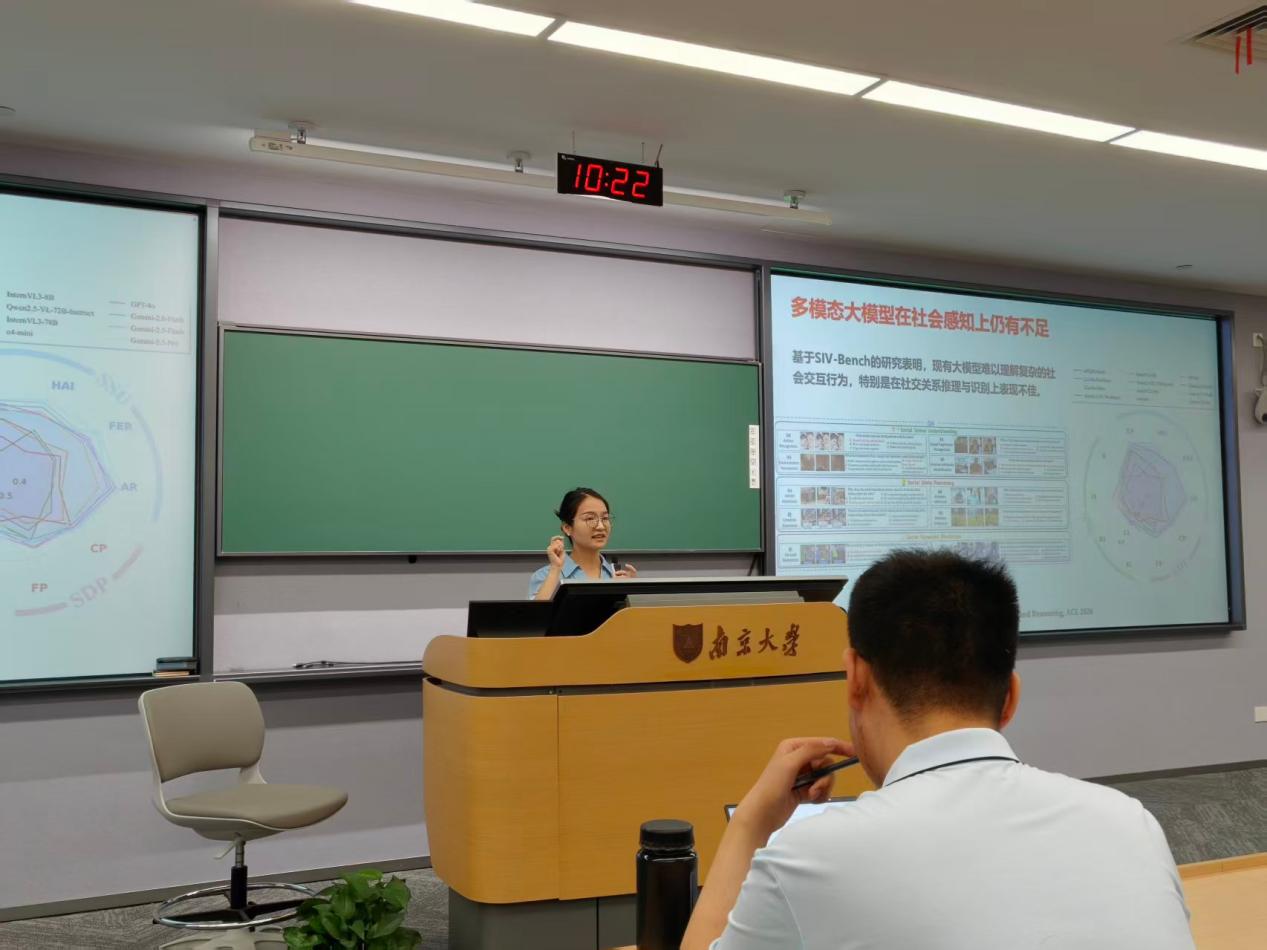
Feng Xue delivered a talk titled "Cognition-Driven Social Intelligence." She pointed out that social intelligence is a key ability distinguishing humans from other primates, with its core lying in the understanding and inference of others' intentions, beliefs, and values—mental states that are also a critical bottleneck on the path toward general artificial intelligence. Unlike intelligence research that primarily focuses on modeling physical laws, social intelligence is grounded in psychological cognitive mechanisms and relies on the modeling and dynamic updating of others' mental states during interaction. In her talk, she introduced the key characteristics of the coupled "physical-social" world, with a focus on exploring a unified representation framework that spans from objective physical laws to subjective psychological cognition and further to social behavioral interactions. She also elaborated on how agents can achieve cross-layer integration from perception to reasoning and decision-making through the inference of others' mental states.
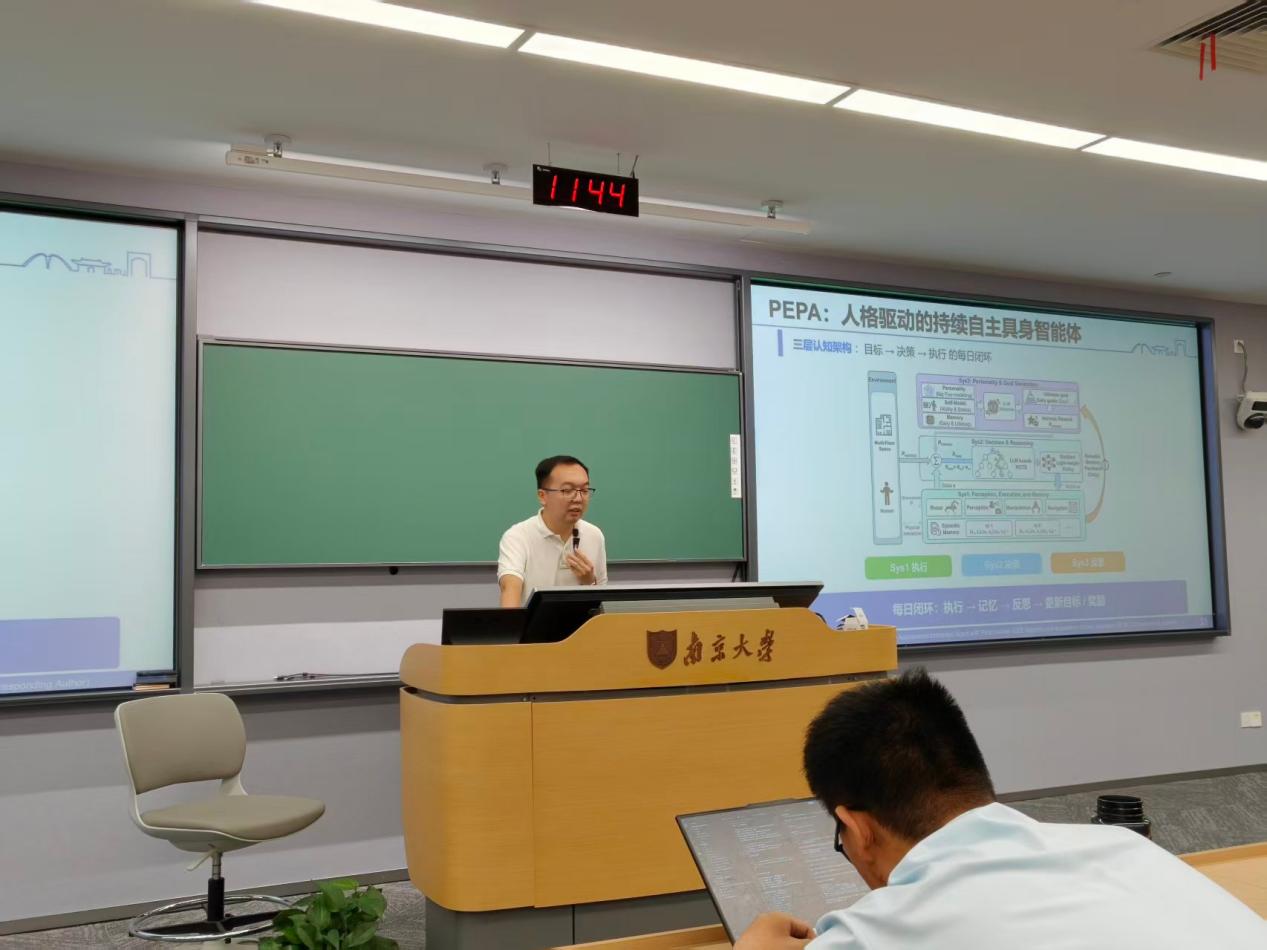
Li Yang delivered a talk titled "Towards Open-World Embodied Multi-Agent Adaptive Collaboration." He pointed out that embodied agents in the real world do not operate in closed, static, or fully pre-defined task environments. Instead, they must contend with continuously changing physical scenes, complex coupled object relationships, collaborating partners with diverse capabilities, and dynamically evolving team structures. Therefore, the key challenge for embodied multi-agent systems lies not only in whether a single agent can perceive its environment and execute actions, but also in whether multiple agents can form stable and flexible collaborative capabilities under uncertain, open, and dynamic conditions. In his talk, Li Yang introduced embodied multi-agent adaptive collaboration, with a focus on lightweight world models, prospective decision-making in open scenarios, dynamic role allocation and spatiotemporal coordination in dual-arm systems, collaborative relationship reorganization in open multi-robot teams, as well as goal evolution and self-regulation mechanisms for long-term autonomous embodied agents. He also outlined the developmental trajectory from "task-executing robots" toward "continuously adapting embodied collaborative systems."
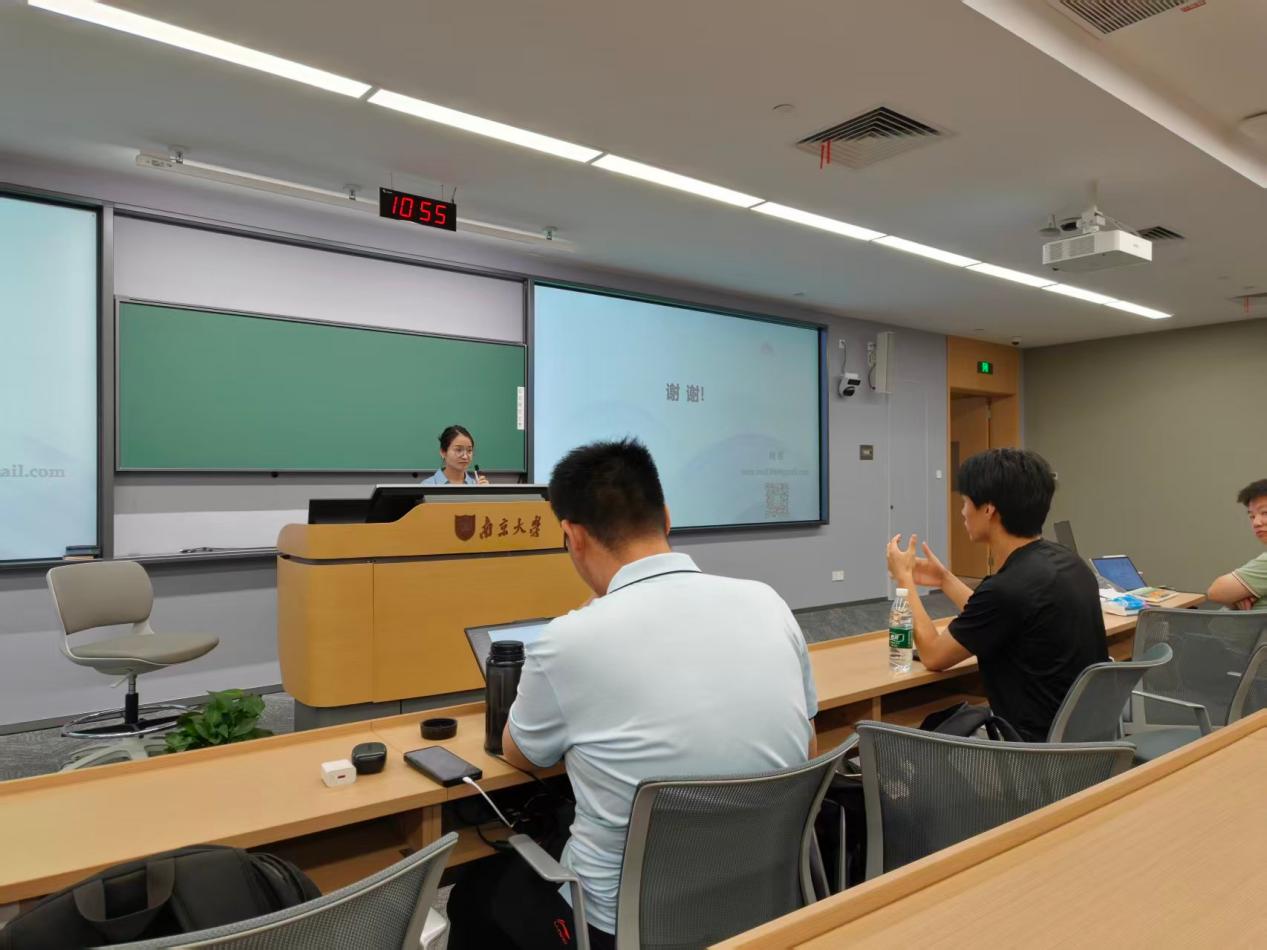
Faculty and students in attendance actively engaged in discussions on topics such as mental modeling in social intelligence, agent reasoning in complex social contexts, open-world embodied collaboration, multi-agent reinforcement learning, and task deployment in real physical environments. The two experts addressed each question based on their own research and practical experience, sparking lively interaction and a discussion filled with insightful highlights.
