

To implement the national Artificial Intelligence+ action goals, as well as the new quality productivity cultivation deployments of Suzhou City and Suzhou High-tech Zone, with the innovation-driven development of Taihu Science City as the core theme, and to fully leverage the comprehensive advantages of the area's clustered research institutes, concentrated talent, and solid industrial foundation, on March 10, 2026, the Taihu Science City Functional Area Achievement Transformation Work Promotion Meeting and the Suzhou Oriental Silicon Valley OPC Community Construction Launch Ceremony were held in Suzhou High-tech Zone.Attending the event were Wu Qi, Deputy Secretary of the Party Working Committee and Director of the Administrative Committee of the Zone; Yang Xibin, Deputy Director of the Suzhou Institute of Biomedical Engineering and Technology, Chinese Academy of Sciences; Wu Shijun, Deputy General Manager of China Mobile Cloud Capability Center; Jiang Tian, Assistant to the President of Nanjing University and Executive Deputy Director of the Suzhou Campus Administrative Committee; as well as district leaders Li Jie, Shen Yan, Yang Liang, and Fu Yuxiang.
At the event, the Double High Synergy Future Industry Innovation Formation was launched, further deepening the collaborative development pathway characterized by institutes possessing technologies, enterprises having demands, and the government building the ecosystem.The China Mobile Industrial Ecosystem Incubation Center Yangtze River Delta Computing Power Network Innovation Base was also inaugurated simultaneously. This base will provide local AI enterprises and innovation entities with access to leading computing power infrastructure and full-stack cloud products, leveraging central-local government collaboration to solidify the computing power foundation of the regional digital economy.The construction of the Suzhou Oriental Silicon Valley OPC Community was also initiated at the event, with the first batch of 10 OPC communities receiving their licenses. Immediately following this, the OPC Community Roadshow Competition took place.

Dong Wenhui, a 2025-level Ph.D. student from our school (supervised by Professor Shan Caifeng and co-supervised by Associate Professor Si Chenyang), presented his project AI Content Generation, Copyright Authentication, and Profit-Sharing Platform Based on Digital Rights Management during the OPC Project Roadshow. He was awarded the First Prize in the Suzhou Oriental Silicon Valley OPC Community Entrepreneurship Competition.

Brief Introduction to the Project Outcomes
AI Content Generation, Copyright Authentication, and Profit-Sharing Platform Based on Digital Rights Management
Yuanzho is an integrated platform for enterprises and creators, combining AI Content Generation + Digital Copyright Authentication + On-Chain Profit-Sharing. It is dedicated to addressing the core challenge in AIGC commercialization: capable of generation, yet hesitant for commercial use.The platform leverages a unified model gateway, asynchronous concurrency scheduling, DiT-based high-fidelity generation capabilities, and cryptographic watermarking traceability technology to achieve high-quality, low-latency production of image, text, and video content. By integrating Decentralized Identity (DID) , smart contracts, and traceable audit mechanisms, it establishes a full-process chain of evidence for each piece of content—covering asset registration, authorization and invocation, and revenue settlement.The product has already been adopted by internationally renowned companies.
Supervisor Profile
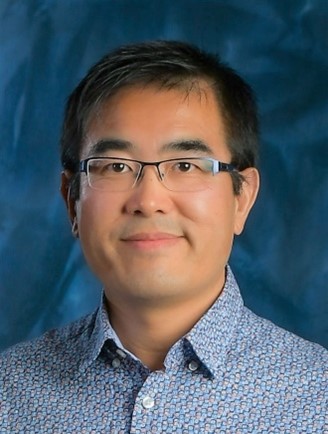
Caifeng Shan,Professor, Doctoral Supervisor, National Leading Talent.Professor Shan currently serves as Associate Dean of the School of Intelligence Science and Technology and Associate Dean of the NJU-China Mobile Joint Research Institute at Nanjing University.He received his B.E. degree from the University of Science and Technology of China in 2001, an M.Eng. degree from the Institute of Automation, Chinese Academy of Sciences in 2004, and a Ph.D. degree from the University of London in 2007. He then worked at Philips Research in the Netherlands for over a decade, serving as a Senior Scientist and Team Leader, while also holding an appointment as a Researcher at Eindhoven University of Technology.His research focuses primarily on computer vision, pattern recognition, and medical image computing. He has led and participated in multiple European Horizon 2020 projects, the National Natural Science Foundation of China (NSFC) Original Exploration Program, and the Ministry of Industry and Information Technology (MIIT) Revealing the List and Taking Charge program.Professor Shan has authored over 170 publications (with more than 10,000 citations) and holds more than 100 granted patents across various countries (including over 60 in the US, Europe, and Japan). He has received the Philips Invention Award and has been named a High Potential Talent at Philips. He is also recognized among the World's Top 2% Most-Cited Scientists. He serves on the editorial boards of over ten international journals (including several IEEE Transactions) as an Editor or Guest Editor.
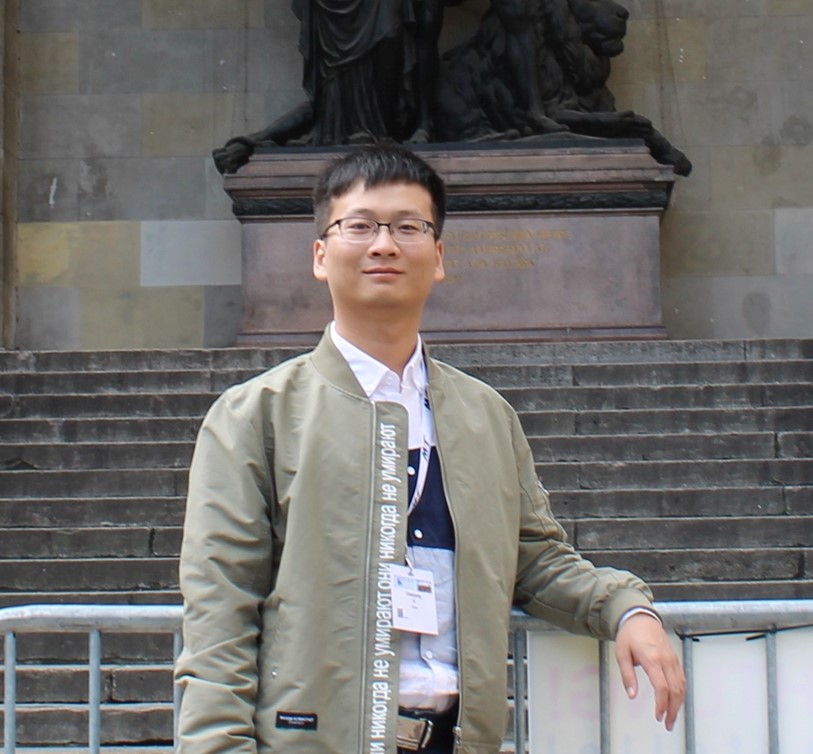
Chenyang Si,Tenure-Track Associate Professor, Specially Appointed Researcher,School of Intelligence Science and Technology, Nanjing University,National Young Talent, Gusu Young Scholar.Dr. Si received his Ph.D. degree in 2021 from the National Laboratory of Pattern Recognition, Institute of Automation, Chinese Academy of Sciences. From June 2021 to January 2023, he worked as a Researcher at SEA AI Lab in Singapore. From February 2023 to February 2025, he served as a Postdoctoral Researcher at MMLab, Nanyang Technological University, Singapore.He has published multiple papers in leading international conferences and journals, including CVPR, ICCV, ECCV, ICLR, NeurIPS, AAAI, TPAMI, TIP, and IJCV. Among these, five papers were selected as Oral presentations, one as Spotlight, and one as Highlight. His work has accumulated over 7,700 citations on Google Scholar, with a single first-author paper cited more than 1,000 times.Several generative algorithms developed by Dr. Si have been integrated into mainstream generative model libraries (e.g., Diffusers, ComfyUI) and successfully deployed in the product systems of multiple enterprises.He serves as a regular reviewer for top-tier international journals and conferences such as TPAMI, TIP, IJCV, CVPR, ICCV, ECCV, ICLR, AAAI, and NeurIPS, and has served as an Area Chair for CVPR and BMVC. He has been named in the Stanford University/Elsevier Top 2% Most-Cited Scientists Worldwide (2025) .His research interests encompass visual understanding and content generation technologies, including fundamental computer vision networks, foundational research on generative models, large models for video/image generation, and acceleration optimization for generative models.
